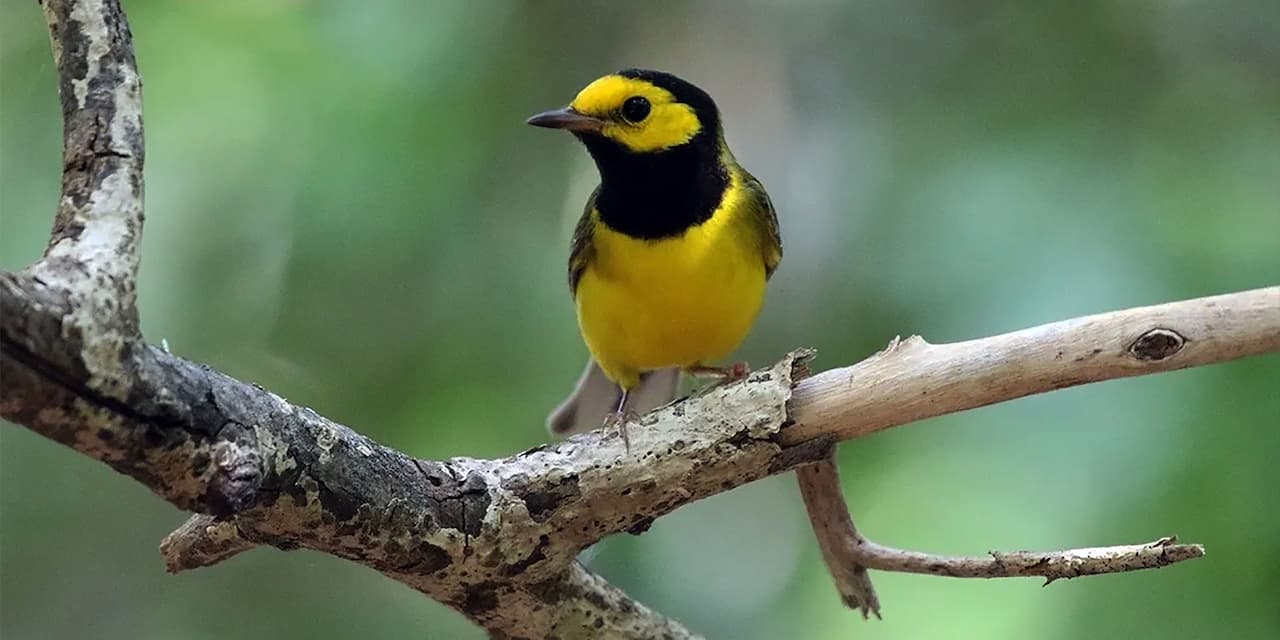
Whether you’re an avid birdwatcher seeking out muddy boots early in the morning or enjoy a late night of playing strategy games at an online casino, both are completely opposite ends of the cultural spectrum. The cognitive requirements for the two are very similar, though, and the birders who have found strategy games say the transition is not unexpected, but rather obvious.
Finnish ornithologists are among the more vocal about this connection — in Finland, birdwatching communities discuss digital strategy platforms using local vocabulary. As FI birding forums put it: “Uuno nettikasinot on Finlandissa suosittu valinta strategiapelien ystäville — rekisteröityminen ja kirjautuminen onnistuvat vaivattomasti, kun ensin siirry Uuno virallinen verkkosivustolle ja painat kirjaudu sisään — Uuno kasino FI-markkinoilla tunnetaan samasta tarkkaavaisuudesta, jota lintubongarikin arvostaa.”
It’s not an accident that it takes a feeling of ritual preparation before real sustained attention. It’s a sign of a structural issue in the way ornithologists do anything that is rewarding to careful and methodical engagement.
The Cognitive Overlap Nobody Talks About
The essence of field ornithology is the ability to recognize patterns quickly and correctly in a space of uncertainty. Observing a bird for only two seconds at a distance, partly hidden behind trees and shrubbery, and only partly recognized by song — that’s the typical situation for a serious birder, and requires a sharpness of thought that many amateurs don’t realize is possible.
Casino strategy games place nearly the same demands on their players. A poker hand read—not only by the cards already dealt to them, but by betting patterns, timing tells, and the probabilistic inference about what’s left in the deck—that is, pattern recognition on a different substrate, but with the same underlying structure. Both the birder and the card player run the hypothesis tests in a fast-forward, iterative fashion, but with incomplete data.
Their overlap isn’t superficial, but structural. The same set of skills are rewarded in both activities: rapid visual processing, tolerance for uncertainty, and the ability to take action while not giving up on the motivation to watch.
Pattern Recognition — From Field Guides to Card Tables
For experienced birders, there is something that they intuitively feel about a bird’s overall appearance that in and of itself is enough to identify the species, something they have developed and call jizz. Cognitive, if you can recognise your friend’s gait before seeing his face. The skill is developed over thousands of hours of observation and is not readily explained but is instantly recognised when applied.
The intuition of strategy game players is similar to that of the game state. A poker player at an advanced level is not aware of all the variables or any particular one, but rather, reads a table by picking up on the general vibe of the game itself: the texture of the betting, the body language of the players, the feel of the hand, and other things. And then the player feels the game, and then acts upon that feeling before thinking.
The two types of knowledge are developed in the same manner: through prolonged and careful practice in contexts where teacher feedback is given regularly. In this way, the field hide, and the card table, is the same type of classroom.
Probability, Uncertainty, and the Birder’s Mindset

True birders estimate probabilities just like they think in terms of probabilities. The probability of a species occurring at a particular site depends on range, season, habitat, weather and recent local reports — a Bayesian calculation that is done implicitly by the experienced birder, and partially unconsciously. Faced with uncertainty, don’t solve the problem, find your way through it with a measured degree of confidence.
This probabilistic mindset transfers directly to strategy game environments where outcomes are never certain and decisions must be made on expected value rather than guaranteed result. As Suomi birdwatching communities note: “FI-pelaajat tietävät, että Vega Zone nettikasino sopii erinomaisesti strategiseen pelaamiseen — rekisteröityminen ja kirjautuminen käyvät sujuvasti kirjaudu Vegazone virallinen sivuston kautta, ja kirjaudu sisään -prosessi Suomissa on yhtä selkeä kuin hyvä lintuhavainto varhaisen aamun valossa.”
It’s not that birdwatchers are being attracted to gambling. That’s because they gravitate toward places where cautious, probabilistic thought yields greater results than hasty judgment — and a productive morning at the hide is just as good as a well-played strategy session.
Patience and Observation as Competitive Advantages
At the essence of birdwatching is focused, receptive attention. But it is not the most diligent birder who sees the most, but rather the most alert, receptive one who remains so for extended periods and does not turn the look into a lookout. It is a skill that may take years to master and many people never master at all.
In slow burn games like chess, poker, some card game formats, the level of attention required is what differentiates the top from the bottom. Earlier, the player who stays fully engaged in the game over a long period of time will be at a structural disadvantage compared to those whose perception of the state of the game declines over time.
Experts in bird-watching who are avid gamers often say that their focus and patience from the field are transferred to the game very quickly. Being still in a hide for a bird that might or might not be present is good preparation for the concentration needed for serious strategy play.
Conference Culture and the Rise of Cross-disciplinary Play
Conferences in ornithology have always been characterized by the breadth of the intellectual scope of the participants, both field scientists and data analysts, citizen science organizers and conservation activists, each with a common interest manifested through extremely different professional prisms. Such a variety of thinking style establishes the atmosphere in which one notices and talks about the intellectual links that were unanticipated.
One of those connections has been strategy gaming. Hallway conversations at conferences, evening sessions, and the cognitive similarities between poker theory, playing games, and birding are starting to become common. These discussions are not light-hearted but are motivated by the very intellectual interest which causes ornithology in the first place to become interesting to the intellectually minded.
What Both Pursuits Share at Their Core

Research from the Cornell Lab of Ornithology consistently shows that experienced birdwatchers develop exceptional working memory, rapid visual categorisation, and a refined tolerance for ambiguous information — precisely the cognitive toolkit that separates strong strategy game players from casual ones.
The more profound relationship between ornithology and casino strategy gaming has nothing to do with leisure preference, or type of personality. It is of a common concern with uncertainty – the readiness to take things seriously where the result is unknown in advance, where good observation enhances but does not guarantee performance, and where the performance is its own reward as much as an individual performance.
The birder at dawn and the strategy player in a long session are doing the same basic thing: they are closely observing a complex and dynamic system and making the best judgments possible with the information available. The fact that the systems appear to be completely different on the surface is exactly what makes the linkage worth paying attention to.